

Research Chemicals
Isoflurane vs Sevoflurane
Jul
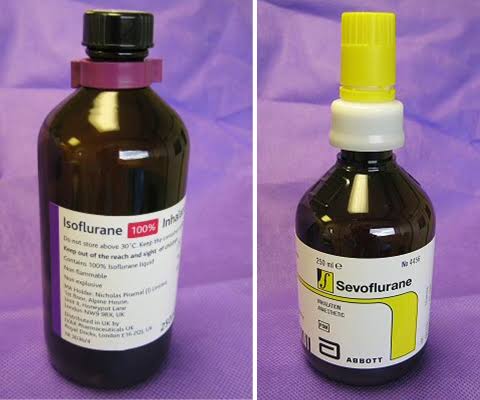
Isoflurane vs Sevoflurane: Key Differences, Uses, Safety & Which Is Better
Inhaled anesthetics remain the backbone of modern surgery, allowing safe, controllable, and reversible general anesthesia. Among the most widely used agents are isoflurane and sevoflurane. While both belong to the same class of halogenated volatile anesthetics, they differ significantly in chemistry, speed of action, airway tolerance, and clinical applications.
In this detailed guide, we break down Isoflurane vs Sevoflurane clearly and simply, covering pharmacology, uses, side effects, cost, and best‑case scenarios.
Isoflurane vs Sevoflurane: What Are They Exactly?
Both drugs are volatile liquid anesthetics that vaporize at room temperature and are delivered via calibrated vaporizers in breathing circuits. They work by depressing the central nervous system to produce unconsciousness, amnesia, and analgesia, but their physical properties change how they behave in the body.
Core Classification & Chemistry
- Isoflurane: Introduced in the 1980s, it is an isomer of enflurane, with a pungent, irritating odor. Chemical formula: C₃H₂ClF₅O.
- Sevoflurane: Approved later, in the 1990s, it is a fluorinated methyl isopropyl ether with a sweet, non‑irritating scent. Chemical formula: C₄H₃F₇O.
Both undergo minimal metabolism in the liver (<5%) and are mostly eliminated unchanged through the lungs, making them relatively safe for long procedures.
Isoflurane vs Sevoflurane: Pharmacology & Speed
The most important difference in Isoflurane vs Sevoflurane lies in their blood‑gas partition coefficient — a measure of how fast the drug enters and leaves the bloodstream.
Induction & Recovery Speed
- Sevoflurane: Coefficient = 0.63 — very low solubility. This means it saturates blood quickly and washes out rapidly. Induction: 2–5 minutes; emergence: 5–10 minutes.
- Isoflurane: Coefficient = 1.4 — higher solubility. It takes longer to reach steady levels and longer to clear. Induction: 5–10 minutes; emergence: 10–20 minutes.
MAC (Minimum Alveolar Concentration) — the dose needed to keep 50% of patients immobile:
- Isoflurane: ~1.15%
- Sevoflurane: ~2.0%
Note: Higher MAC means sevoflurane is slightly less potent by volume, but easier to control precisely.
Isoflurane vs Sevoflurane: Clinical Uses & Applications
Choosing between Isoflurane vs Sevoflurane depends largely on the patient, surgery type, and setting.
When to Use Sevoflurane
Pediatric & outpatient surgery: Non‑irritating odor allows inhalation induction without IV lines first; less risk of coughing or laryngospasm.
Short procedures: Fast wake‑up reduces stay time and early side effects.
Asthma or sensitive airways: Bronchodilator effect, no airway irritation.
Neurosurgery: Minimal effect on intracranial pressure at stable doses.
When to Use Isoflurane
Long, complex surgeries: Lower cost, stable hemodynamics, good muscle relaxation.
Cardiac surgery: Well‑studied, preserves coronary flow, though “coronary steal” risk exists in vulnerable patients.
Veterinary medicine: Widely used due to lower expense and reliable potency.
Resource‑limited settings: More affordable and widely available globally.
Source: WHO Essential Medicines List — Isoflurane & Sevoflurane
Isoflurane vs Sevoflurane: Side Effects & Safety Profile
Respiratory Effects
- Sevoflurane: No pungent smell, does not trigger coughing or breath‑holding. Slightly more respiratory depression at higher doses, but easier to manage.
- Isoflurane: Strong, irritating odor — often causes coughing, salivation, or laryngospasm if inhaled directly; usually given after IV induction.
Cardiovascular Effects
- Both cause mild vasodilation and dose‑dependent hypotension.
- Isoflurane: Slightly more stable heart rate; historically linked to “coronary steal” in patients with severe blockages, though modern practice mitigates this.
- Sevoflurane: May cause mild bradycardia but does not sensitize the heart to adrenaline‑induced arrhythmias.
Metabolism & Organ Risk
- Isoflurane: Metabolized <0.2% — almost no liver/kidney toxicity risk.
- Sevoflurane: ~2–5% metabolized to fluoride ions. In rare cases, can react with desiccated CO₂ absorbents to form Compound A, a potential nephrotoxin. Risk is negligible with fresh absorbents and flows >2 L/min.
Post‑Operative Recovery
- Sevoflurane: Less coughing, less sore throat, but slightly higher early nausea/vomiting rates in some studies.
- Isoflurane: More coughing on wake‑up, but lower agitation in adults.
Source: NCBI StatPearls — Inhaled Anesthetics
Direct Comparison Table
Table
| Feature | Isoflurane | Sevoflurane |
|---|---|---|
| Blood‑gas coefficient | 1.4 (slower) | 0.63 (faster) |
| MAC | 1.15% | 2.0% |
| Odor | Pungent, irritating | Sweet, non‑irritating |
| Induction route | Mostly IV first | Inhalation or IV |
| Best for | Long surgery, adults, low‑cost | Kids, outpatients, sensitive airways |
| Cost | Lower | Higher |
| Recovery speed | Moderate | Fast |
| Metabolism | <0.2% | 2–5% |
| Nephrotoxic risk | Negligible | Very low (Compound A) |
| Bronchodilation | Mild | Strong |
Why Trust Expressk2.com for Medical Information?
At Expressk2.com, we deliver accurate, evidence‑based content you can rely on. Here is why professionals and students choose us:
Authoritative Sources: We reference FDA, WHO, NCBI, and major anesthesia guidelines to ensure every fact is up‑to‑date and correct.
Clear & Accessible: We explain complex pharmacology simply, so you don’t need a medical degree to understand the difference between Isoflurane vs Sevoflurane.
Responsible & Compliant: We provide educational content only — no promotion of misuse, and clear warnings about prescription‑only use.
Secure & Reliable: Our platform follows strict privacy and content standards, updated regularly to reflect new clinical data.
Trusted Community: We serve thousands of readers seeking reliable drug comparisons and health information.
Frequently Asked Questions
1. Which is faster: isoflurane or sevoflurane?
Sevoflurane is faster. Its lower blood‑gas solubility means it puts patients to sleep and wakes them up in half the time of isoflurane.
2. Can sevoflurane be used for inhalation induction?
Yes. Because it has no irritating smell, it is the only modern volatile suitable for mask induction in children or needle‑phobic adults.
3. Is isoflurane safer than sevoflurane?
Both are safe. Isoflurane has almost no metabolic breakdown, while sevoflurane’s Compound A risk is clinically insignificant with proper equipment use.
4. Why is sevoflurane more expensive?
Manufacturing and purification costs are higher. The faster recovery and better patient comfort justify the price in many settings.
5. Which is better for heart surgery?
Both are used. Isoflurane has a longer track record, but sevoflurane offers similar stability and faster extubation in most studies.
6. Do they cause cancer or organ damage?
No. At clinical doses, they are not carcinogenic, and liver/kidney injury is extremely rare in healthy patients.
- WHO: https://cdn.who.int/media/docs/default-source/essential-medicines/2023-eml-expert-committee/expert-reviews/a41_sevoflurane_rev1.pdf
- FDA Isoflurane: https://www.accessdata.fda.gov/drugsatfda_docs/label/2020/017913s037lbl.pdf
- FDA Sevoflurane: https://www.accessdata.fda.gov/drugsatfda_docs/label/2021/020497s015lbl.pdf
- NCBI StatPearls: https://www.ncbi.nlm.nih.gov/books/NBK544282/
- Cleveland Clinic: https://my.clevelandclinic.org/health/drugs/22275-sevoflurane-inhalation
- Wikipedia: https://en.wikipedia.org/wiki/Sevoflurane, https://en.wikipedia.org/wiki/Isoflurane
📌 Schema Markup
json
{
  "@context": "https://schema.org",
  "@type": "Article",
  "headline": "Isoflurane vs Sevoflurane: Key Differences, Uses, Safety & Which Is Better",
  "author": {"@type": "Organization", "name": "Expressk2.com", "url": "https://expressk2.com/"},
  "publisher": {"@type": "Organization", "name": "Expressk2.com", "logo": {"@type": "ImageObject", "url": "https://expressk2.com/logo.png"}},
  "datePublished": "2026-07-05",
  "dateModified": "2026-07-05",
  "description": "Compare isoflurane vs sevoflurane: speed, safety, cost, and best uses. Evidence‑based guide for medical professionals.",
  "keywords": "Isoflurane vs Sevoflurane, anesthesia comparison, inhaled anesthetics",
  "mainEntityOfPage": {"@type": "WebPage", "@id": "https://expressk2.com/blog/isoflurane-vs-sevoflurane"}
}
Final Thoughts
When comparing Isoflurane vs Sevoflurane, there is no universal “best” — only the best choice for each case. Sevoflurane wins for speed, comfort, and pediatric use, while isoflurane remains a reliable, cost‑effective workhorse for longer procedures and tight budgets.
Both are among the safest, most controllable general anesthetics available today when used by trained professionals.
For more trusted medical comparisons and clear health information, visit https://expressk2.com/ — your reliable source for evidence‑based content.
desflurane and sevoflurane, desflurane sevoflurane, difference between isoflurane and sevoflurane, difference between sevoflurane and desflurane, cost of sevoflurane, sevoflurane cost per bottle, sevoflurane general uses, what is sevoflurane used for, how to use sevoflurane, sevoflurane uses, sevoflurane side effects, possible side effects of sevoflurane, sevoflurane bottle, isoflurane vs sevoflurane, isoflurane vs sevoflurane differences, sevoflurane vs isoflurane, inhaled anesthesia comparison, isoflurane uses, sevoflurane benefits, pediatric anesthesia sevoflurane, isoflurane side effects, MAC values isoflurane sevoflurane, volatile anesthetics guide
